
Project Scope
Project Scope
Project Scope
App
Responsive web
Role
Role
Role
Product designer
Deliverables
Deliverables
Deliverables
Research
Interview
Personas
Competitive analysis
Wireframe
High Fidelity
Tools
Tools
Tools
Figma
FigJam
Duration
Duration
Duration
6 weeks
Problem
Problem
On the surface, time management appears to be a simple notion. You have a task to complete and a time limit to complete it. Managing your time effectively can allow you to easily fulfill deadlines, whether they are self-made or imposed by an employer, instructor, client, or other third party.
Lots of people have too much to do and " too little time for their personal lives. Most people feel overwhelmed with responsibilities and activities. This sense of being on a never-ending treadmill can cause them to fall into the reactive/responsive mode. Instead of clearly deciding what they want to do, they continually react to what is happening around them. Pretty soon they lose all sense of control.
A quick web search will reveal thousands of tips, tricks, or hacks to stay on task and motivated. So, generally speaking, we are quite aware of the value of time. But for the average person, it’s far too easy to chalk up a string of unproductive days as it just “being one of those weeks” or “the way it is.” The reality is that poor time management isn’t just “the way it is”. Without premeditation and a set schedule that should be adhered to every day, procrastination can be a daunting factor in a time frame reference.
On the surface, time management appears to be a simple notion. You have a task to complete and a time limit to complete it. Managing your time effectively can allow you to easily fulfill deadlines, whether they are self-made or imposed by an employer, instructor, client, or other third party.
Lots of people have too much to do and " too little time for their personal lives. Most people feel overwhelmed with responsibilities and activities. This sense of being on a never-ending treadmill can cause them to fall into the reactive/responsive mode. Instead of clearly deciding what they want to do, they continually react to what is happening around them. Pretty soon they lose all sense of control.
A quick web search will reveal thousands of tips, tricks, or hacks to stay on task and motivated. So, generally speaking, we are quite aware of the value of time. But for the average person, it’s far too easy to chalk up a string of unproductive days as it just “being one of those weeks” or “the way it is.” The reality is that poor time management isn’t just “the way it is”. Without premeditation and a set schedule that should be adhered to every day, procrastination can be a daunting factor in a time frame reference.

The Goal
The goal of this case study is to design a simple yet effective time and schedule management for individuals. The following are the highlighted objectives:
Recognize the precise requirements of users for time management.
Create and validate assumptions of users.
Develop a flexible method for users to create tasks.
Figure out how to make the app's capabilities intuitive.
The goal of this case study is to design a simple yet effective time and schedule management for individuals. The following are the highlighted objectives:
Recognize the precise requirements of users for time management.
Create and validate assumptions of users.
Develop a flexible method for users to create tasks.
Figure out how to make the app's capabilities intuitive.
My Design Process
My Design Process
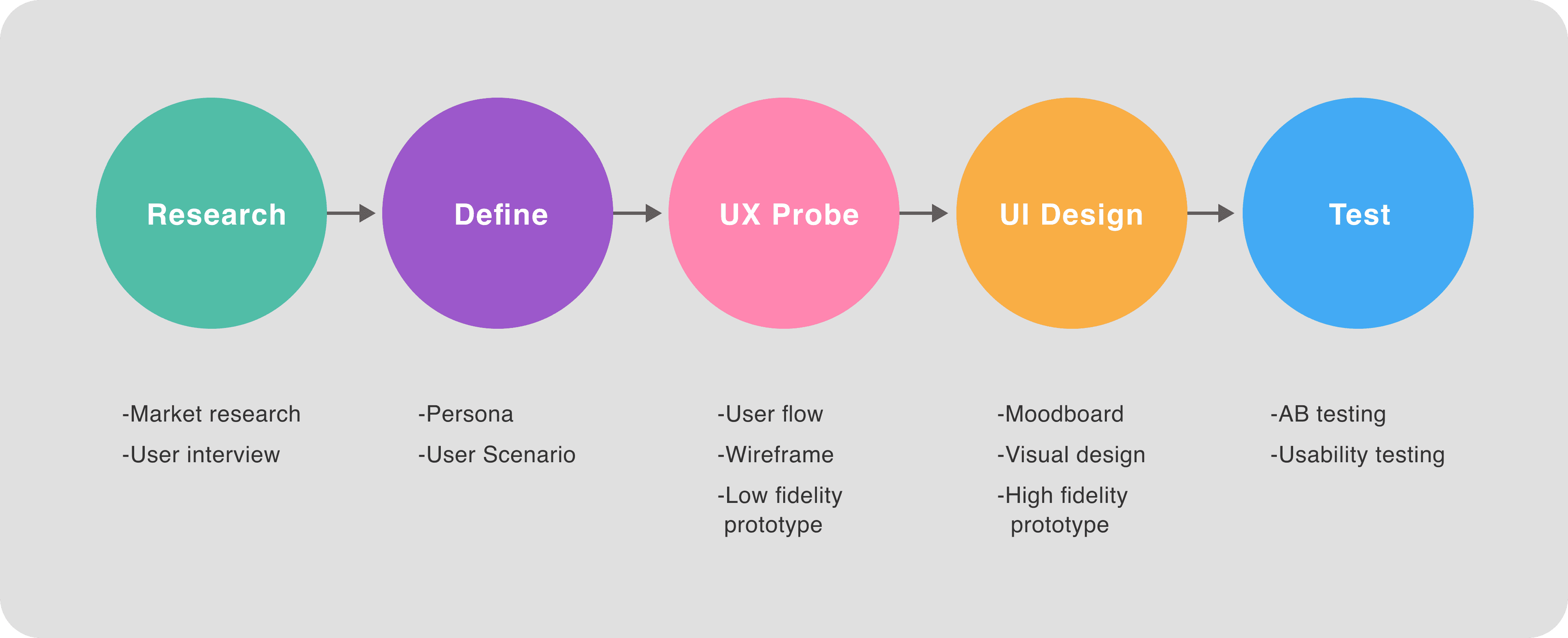
Research
Research
In the course of this project, I collaborated with a business analyst/product manager and we conducted some research to determine what we were producing. We did this to put our assumptions to the test, obtain a better understanding of the users' difficulties, and connect it to the goals. The UX phase began with getting to know the customers and their scheduling challenges.
The goal of the research was to get a full understanding of the issue as it directly affects users, uncovering their needs and concerns. As a result, I was able to better relate to and appreciate the issues that people were experiencing with other products. As part of the research, surveys were administered to collect qualitative and quantitative data.
In the course of this project, I collaborated with a business analyst/product manager and we conducted some research to determine what we were producing. We did this to put our assumptions to the test, obtain a better understanding of the users' difficulties, and connect it to the goals. The UX phase began with getting to know the customers and their scheduling challenges.
The goal of the research was to get a full understanding of the issue as it directly affects users, uncovering their needs and concerns. As a result, I was able to better relate to and appreciate the issues that people were experiencing with other products. As part of the research, surveys were administered to collect qualitative and quantitative data.

Competitive Analysis
Competitive Analysis
By learning how both direct and non-direct competitors solve similar user problems, I was able to decide what creative solutions may be birthed for the product.
By learning how both direct and non-direct competitors solve similar user problems, I was able to decide what creative solutions may be birthed for the product.

Design Decisons
Design Decisons
These user interface designs are the result of my design approach, which was highly affected by iterative research findings. As opposed to depending on personal preferences or biased assumptions, I focused on creating for the user. The goal of this user-centered design approach was to build solutions that truly met the needs and expectations of the intended audience.
These user interface designs are the result of my design approach, which was highly affected by iterative research findings. As opposed to depending on personal preferences or biased assumptions, I focused on creating for the user. The goal of this user-centered design approach was to build solutions that truly met the needs and expectations of the intended audience.
Who am i designing for?
Who am i designing for?
Based on the research I carried out, I was able to develop with two personas for the project as seen below.
Based on the research I carried out, I was able to develop with two personas for the project as seen below.
Festus Ojo, 23

Location
Lagos, Nigeria
Status
Single
It would be nice to get tasks done in time and not miss deadlines.
Bio
Festus is a software engineer who works in a fintech company, he does freelancing on the side for extra income and he’s always missing deadlines or having uncompleted tasks.
Core needs
Proper tasks allocation
Constant reminders for ongoing tasks and upcoming tasks
Progress bar showing how much tasks has been completed
Reminders when tasks is almost over
Frustrations
Not seeing a progress visual of what has been done
No reminders when time assigned for a task has almost elapsed
No reminders for upcoming tasks
Pricilla Ike, 38

Location
PortHarcourt, Nigeria
Status
Married
I just want to spend as little time on social media as possible and also get my tasks for the day done.
Bio
Priscilla is a married mother of 2 and she is a nurse. She always ends her day very exhausted with still so much to do and no idea how time went away from her, she has a an obssession with instagram and tiktok and can’t seem to control herself when she’s on any of the apps.
Core needs
Get a handle on her social media addiction
Have a better handle on schedule and to-do lists
Be able to set tasks in order of priority
Frustrations
Non-flexibility of so many to-do apps
No proper management for phone apps
Can’t set priority of tasks
User Story
User Story
The key issues that some users encountered are listed below:
As a user, I want a quick wake-up call (call to action) to complete my specified task on time.
As a user, I want to be reminded about my to-do list and the consequences of not being timely.
As a user, I want to have automated settings so I don't feel stressed to do the setup myself.
As a user, I want to be able to track my daily performance.
As a user, I want to be able to have a time frame for each chores/activity
As a user, I need to be able to get daily reminders to keep me on track with my tasks.
As a user, I want the app to forcefully close down apps when on overtime.
As a user, I want to be able to keep track of what needs to be done per time.
As a user, I want to have a space where I can input my daily activities.
As a user, I want to be able to order tasks in order of priority.
As a user, I want to be able to spend less time on social media.
As a user, I want a to-do list with estimated time and alarm notifications.
The key issues that some users encountered are listed below:
As a user, I want a quick wake-up call (call to action) to complete my specified task on time.
As a user, I want to be reminded about my to-do list and the consequences of not being timely.
As a user, I want to have automated settings so I don't feel stressed to do the setup myself.
As a user, I want to be able to track my daily performance.
As a user, I want to be able to have a time frame for each chores/activity
As a user, I need to be able to get daily reminders to keep me on track with my tasks.
As a user, I want the app to forcefully close down apps when on overtime.
As a user, I want to be able to keep track of what needs to be done per time.
As a user, I want to have a space where I can input my daily activities.
As a user, I want to be able to order tasks in order of priority.
As a user, I want to be able to spend less time on social media.
As a user, I want a to-do list with estimated time and alarm notifications.
User Flow
User Flow
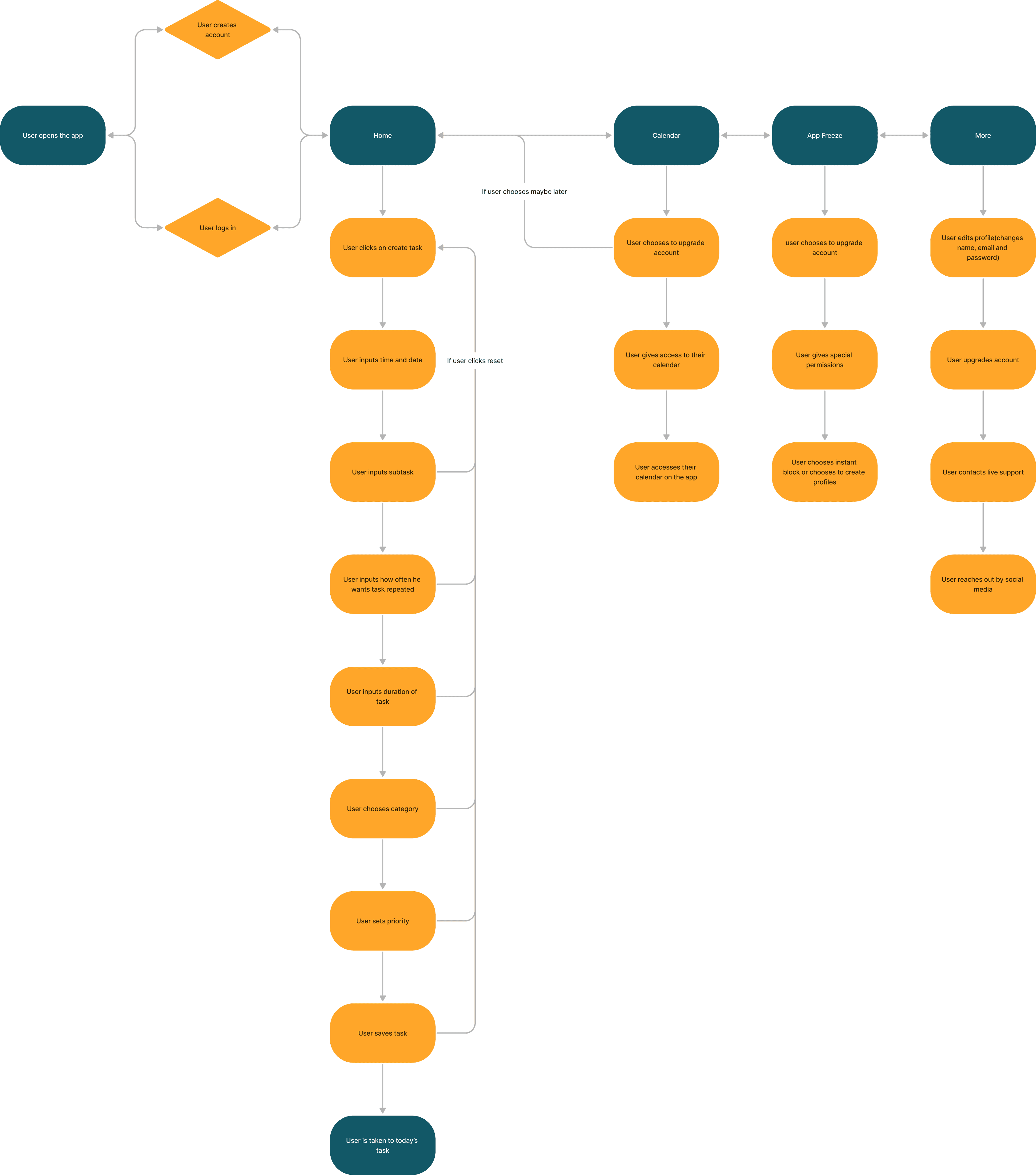
User flow helped me in modeling the flow of the user's activities in the product from the entry point through the user's decisions and subsequent actions in order to account for each stage of the user's journey.
User flow helped me in modeling the flow of the user's activities in the product from the entry point through the user's decisions and subsequent actions in order to account for each stage of the user's journey.
The Solution
The Solution
Following the identification of user pain points and the creation of user stories, we held several brainstorming sessions and came up with the following solutions:
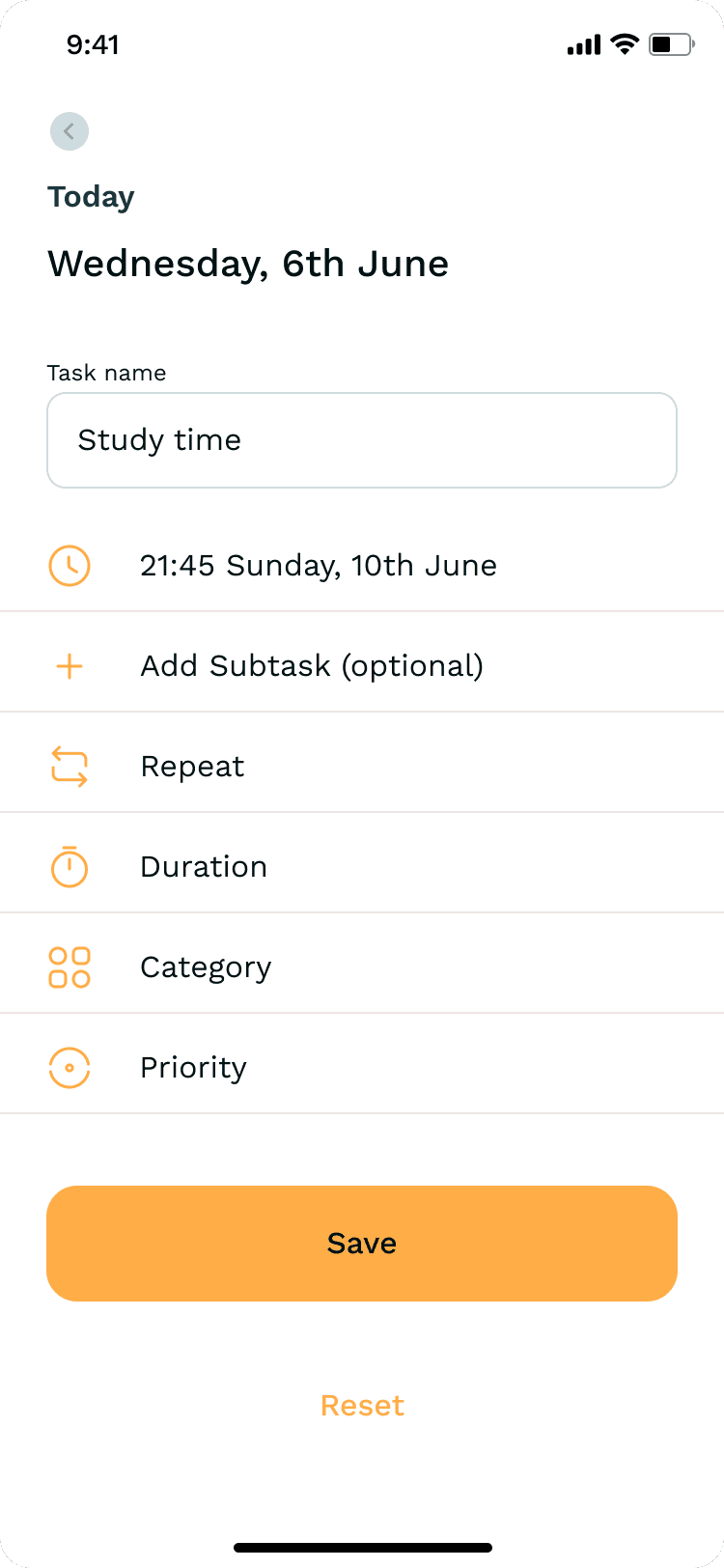
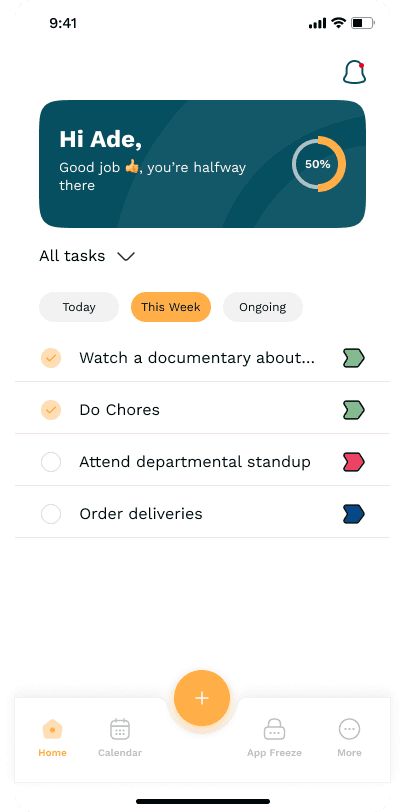
An easy way to create tasks with options of duration, priority, category, repetition and subtasks for further breakdown of the task.
A dashboard to track daily and weekly performance
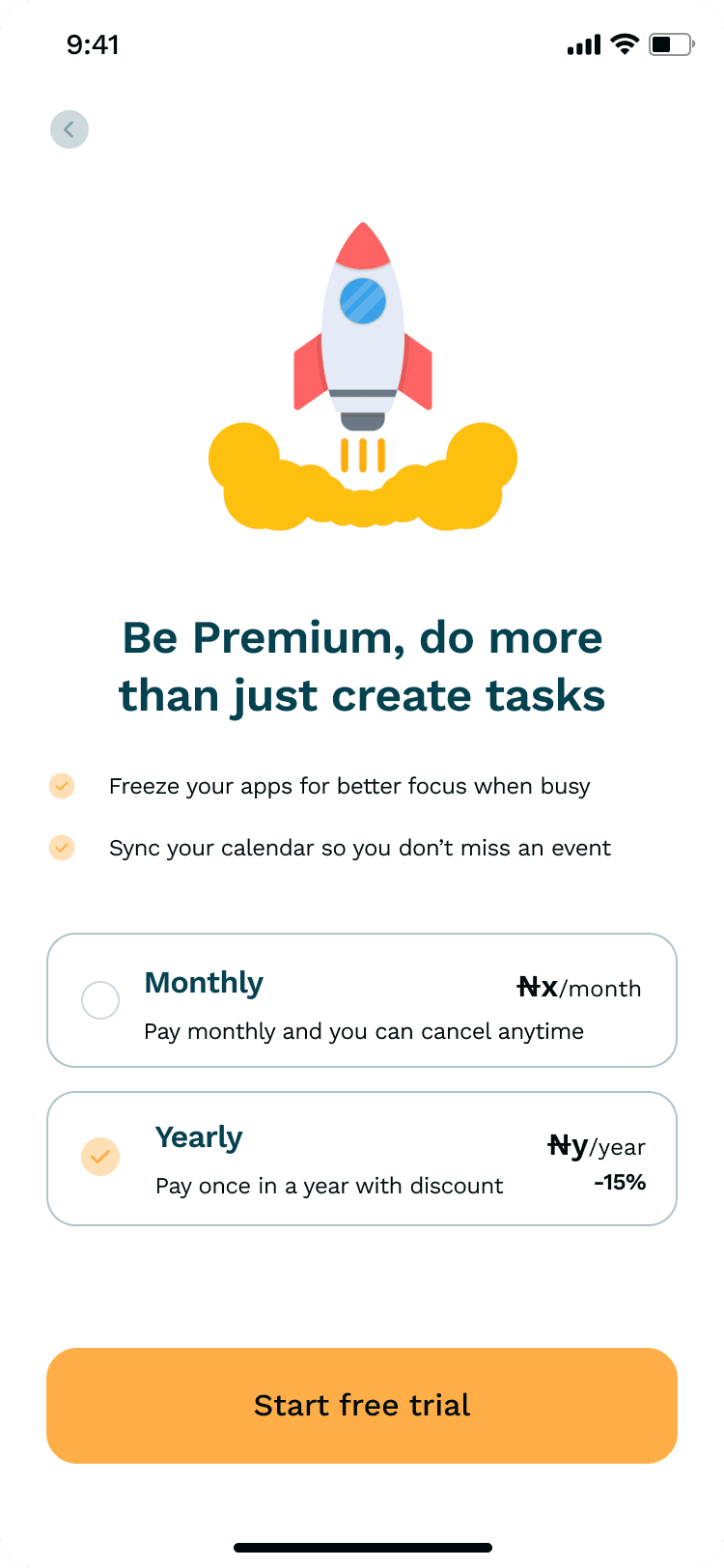
Ability to sync your calendar schedules with your app tasks(premium feature).
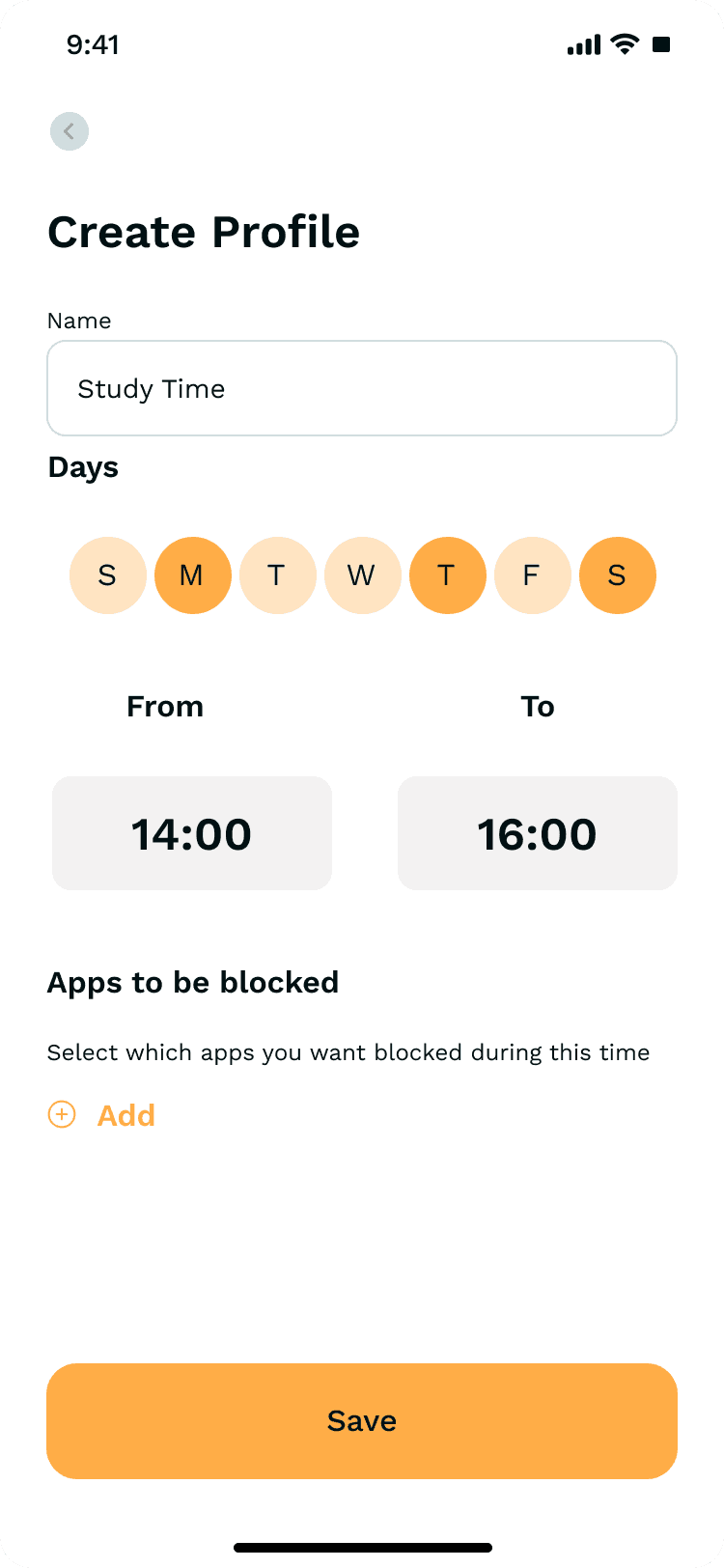
An easy way to freeze apps of your choice for a duration or create profiles for repeated purposes(premium feature).
Following the identification of user pain points and the creation of user stories, we held several brainstorming sessions and came up with the following solutions:
An easy way to create tasks with options of duration, priority, category, repetition and subtasks for further breakdown of the task.
A dashboard to track daily and weekly performance
Ability to sync your calendar schedules with your app tasks(premium feature).
An easy way to freeze apps of your choice for a duration or create profiles for repeated purposes(premium feature).
Final UI Design & Prototype
Final UI Design & Prototype
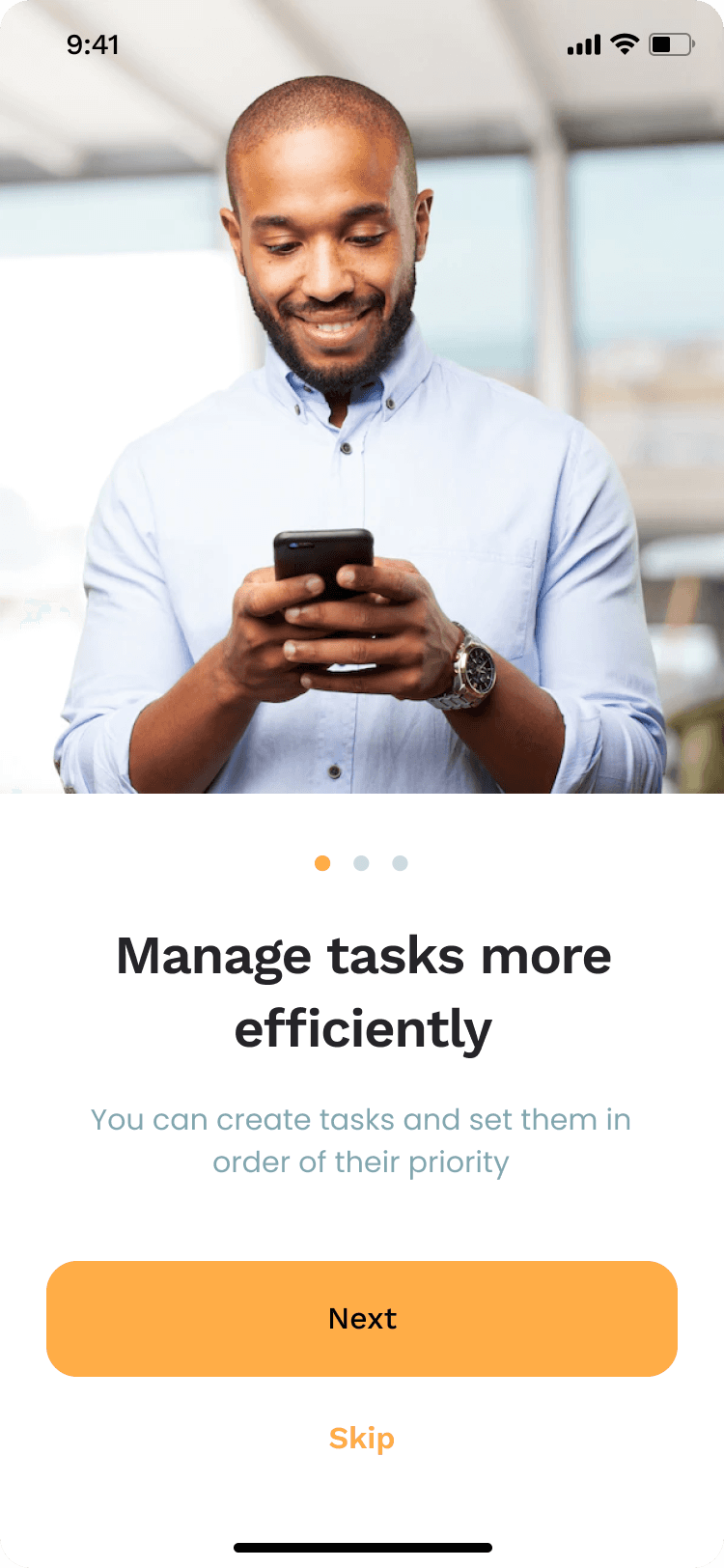
The UI designs shown below are the results of iterations I performed on the research findings. As I was creating for the user rather than myself, I relied heavily on the study findings. I didn't want a design that was skewed because of assumptions.
The UI designs shown below are the results of iterations I performed on the research findings. As I was creating for the user rather than myself, I relied heavily on the study findings. I didn't want a design that was skewed because of assumptions.

Test: Validation, Usability & Feedback
Test: Validation, Usability & Feedback
We attempted to test the prototype with a small group of people and received feedback.
Some users requested that the total of their finished and uncompleted tasks be displayed instead of all tasks at once, and this request was fulfilled.
Some users requested distinct profiles for freezing their apps rather than going into the app and manually setting it every time; this was also added.
Some users requested the ability to alter their profile, which was also included.
Aside from that, everyone who tested it remarked the product was something they would absolutely use because it had an appealing UI that was very easy to use.
We attempted to test the prototype with a small group of people and received feedback.
Some users requested that the total of their finished and uncompleted tasks be displayed instead of all tasks at once, and this request was fulfilled.
Some users requested distinct profiles for freezing their apps rather than going into the app and manually setting it every time; this was also added.
Some users requested the ability to alter their profile, which was also included.
Aside from that, everyone who tested it remarked the product was something they would absolutely use because it had an appealing UI that was very easy to use.
Constraints & Assumptions
Constraints & Assumptions
Not everything went according to our own plan and pre-assumptions
We wanted to add some more features, but after reviewing the survey replies, we learned that consumers just wanted their app locked and the ability to create tasks freely, so we stuck to that
We wanted to offer something for business owners that had trouble remembering customer orders or meeting deadlines, but we had to focus on individuals as our MVP.
My final design and solution were based on insights gained through my own research and nothing more.
Not everything went according to our own plan and pre-assumptions
We wanted to add some more features, but after reviewing the survey replies, we learned that consumers just wanted their app locked and the ability to create tasks freely, so we stuck to that
We wanted to offer something for business owners that had trouble remembering customer orders or meeting deadlines, but we had to focus on individuals as our MVP.
My final design and solution were based on insights gained through my own research and nothing more.
Conclusion
Conclusion
The goal of this project was to provide a platform that would assist users in effectively and flexibly managing their time and schedules. I learned more about user pain points, habits, and behaviors during the user research. I also resisted letting my personal assumptions impact my design by ensuring that it was fully based on my research. This enabled me to create a user experience that was targeted to the people for whom I designed.
The goal of this project was to provide a platform that would assist users in effectively and flexibly managing their time and schedules. I learned more about user pain points, habits, and behaviors during the user research. I also resisted letting my personal assumptions impact my design by ensuring that it was fully based on my research. This enabled me to create a user experience that was targeted to the people for whom I designed.